 Europe
•
League
Europe
•
League
Europa League
2026/2027
36
Teams
142
Matches
Europe
•
League
2026/2027
36
Teams
142
Matches
 AZ Alkmaar
 Hapoel Be'er Sheva
October 15, 2026 · 18:45
 Union Saint-Gilloise
 Real Sociedad
October 15, 2026 · 18:45
 Torreense
 Sunderland
October 15, 2026 · 18:45
 Lech Poznań
 Bayer 04 Leverkusen
October 15, 2026 · 18:45
 Olympique Lyonnais
 Crystal Palace
October 15, 2026 · 18:45
 Sparta Praha
 Lillestrøm
October 15, 2026 · 18:45
 Celje
Celje
 Omonia Nicosia
October 15, 2026 · 18:45
 Salzburg
 AC Milan
October 15, 2026 · 18:45
 Dinamo Zagreb
 Anderlecht
October 15, 2026 · 21:00
 Olympique Marseille
 Olympiacos F.C.
October 15, 2026 · 21:00
 Europa League
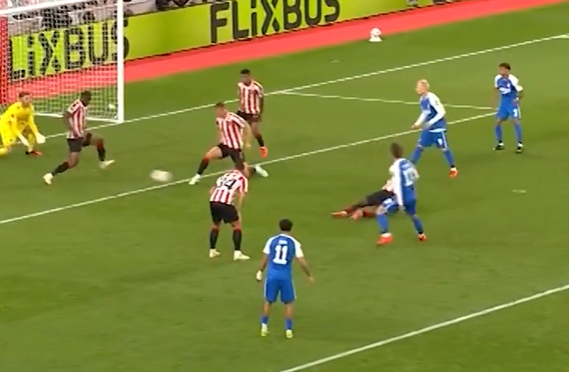
Watch Sunderland pull off a heroic defensive stand to keep AZ Alkmaar at bay in the Europa League.
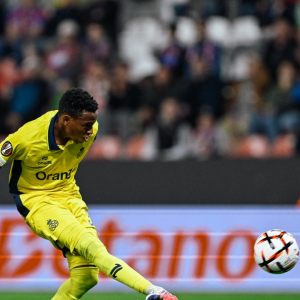
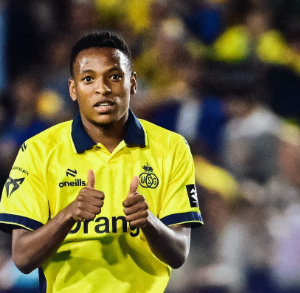
Relebohile Mofokeng opened the scoring as Union Saint-Gilloise beat Viktoria Plzen 3-0 on a dramatic Europa League night.
Relebohile Mofokeng hit the ground running in the Europa League by scoring just 17 minutes into his debut.
| # | Team | P | W | L | Pts | Form |
|---|---|---|---|---|---|---|
| 1 |
 Juventus
|
1 | 1 | 0 | 3 |
W
|
| 2 |
Crystal Palace
|
1 | 1 | 0 | 3 |
W
|
| 3 |
Sparta Praha
|
1 | 1 | 0 | 3 |
W
|
| 4 |
 Beşiktaş
|
1 | 1 | 0 | 3 |
W
L
W
W
W
|
| 5 |
Union Saint-Gilloise
|
1 | 1 | 0 | 3 |
W
|
| 6 |
 Ferencvárosi
|
1 | 1 | 0 | 3 |
W
W
W
D
W
|
Top 4 qualify for European competition
Juventus
JUV
Crystal Palace
CRY
Sparta Praha
SPA
Beşiktaş
BES
Union Saint-Gilloise
USG
Ferencvárosi
FTC
The UEFA Europa League is Europe’s second-tier club competition, sitting below the UEFA Champions League in UEFA’s structure. It offers clubs a major continental title and a route into the following season’s Champions League.
The competition began in 1971 as the UEFA Cup, replacing the Inter-Cities Fairs Cup.
In 2009, it was rebranded as the UEFA Europa League, introducing a more structured format and expanding participation. The competition remains one of UEFA’s key tournaments, with a wide range of clubs competing across Europe.
The UEFA Europa League introduced a new format from the 2024–25 season.
Teams level on points are separated by:
Sevilla (Spain) are the most successful club in the competition’s history. Their strength in knockout football has defined the modern Europa League era.
Clubs from Spain, England and Italy have consistently featured among the winners, reflecting the strength of those leagues in European competition.
The competition’s all-time scoring records combine the UEFA Cup and Europa League eras. Players such as Henrik Larsson, Pierre-Emerick Aubameyang and Klaas-Jan Huntelaar are among the leading scorers across the competition’s history.
Players such as Giuseppe Bergomi and João Moutinho are among the leaders for appearances across the UEFA Cup and Europa League eras.
Henrik Larsson remains one of the most important forwards in the competition’s history due to his goalscoring record across the UEFA Cup and Europa League eras.
Pierre-Emerick Aubameyang has also been a consistent performer in the modern competition, contributing heavily in knockout matches.
Players from Sevilla’s dominant era have shaped the modern identity of the competition, reflecting the club’s sustained success.
Unai Emery is the most successful manager in the competition’s history, leading Sevilla to three consecutive titles and later winning the tournament again with Villarreal.
Diego Simeone guided Atlético Madrid to multiple titles, building one of the most effective knockout teams in Europe.
José Mourinho also holds a place in the competition’s history after leading Manchester United to the title.
The UEFA Europa League provides clubs with a major European platform outside the Champions League. It offers consistent international competition and a direct route into Europe’s top tournament.
The competition is often more open, with a wider range of clubs capable of winning the title across different leagues.
Success in the Europa League remains a significant achievement in European football.