 Germany
•
League
Germany
•
League
Bundesliga
2026/2027
18
Teams
36
Matches
Germany
•
League
2026/2027
18
Teams
36
Matches
 FC Union Berlin
 Schalke 04
September 11, 2026 · 20:30
 FSV Mainz 05
 Eintracht Frankfurt
September 12, 2026 · 15:30
 FC Augsburg
 Bayer 04 Leverkusen
September 12, 2026 · 15:30
 SC Freiburg
 Borussia Mönchengladbach
September 12, 2026 · 15:30
 TSG Hoffenheim
 VfB Stuttgart
September 12, 2026 · 15:30
 Borussia Dortmund
 Paderborn
September 12, 2026 · 15:30
 FC Köln
 Werder Bremen
September 12, 2026 · 18:30
 RB Leipzig
 Hamburger SV
September 13, 2026 · 15:30
 Elversberg
 FC Bayern München
September 13, 2026 · 17:30
FC Bayern München
FC Union Berlin
September 18, 2026 · 20:30
 Premier League
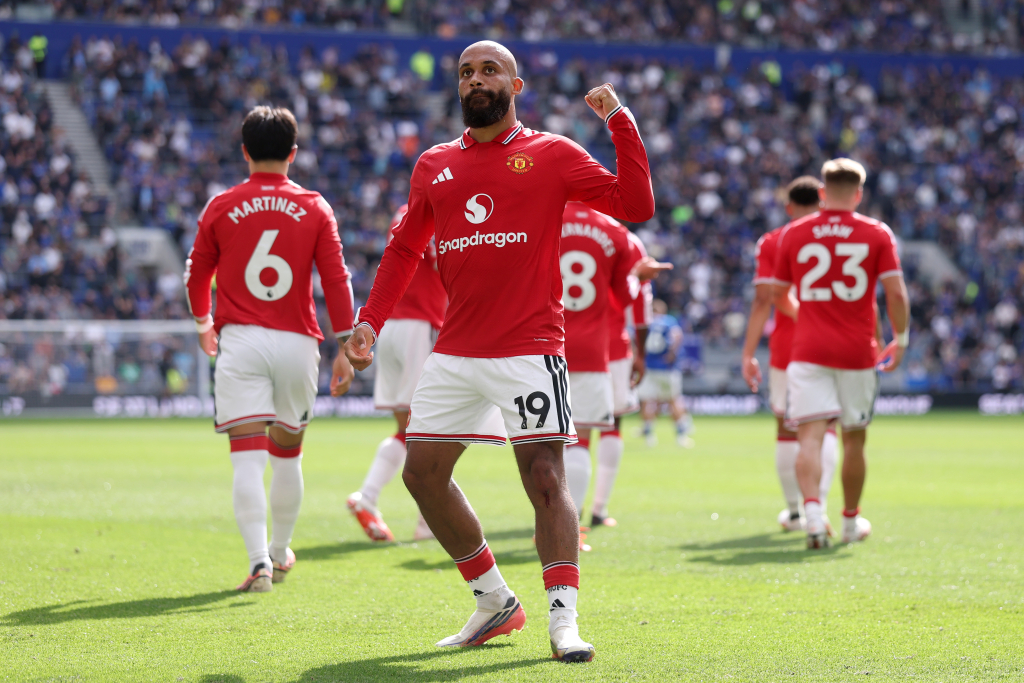
Bryan Mbeumo scored a superb solo goal for Manchester United, while Pietter-Emerick Aubameyang ran the show for Deportivo La Coruna.
Ashley Cole, Luis Figo, Robert Lewandowski and more, here are 10 players who crossed football's fiercest divides to join their biggest rivals.
Yoane Wissa scored with a clever over-the-shoulder flick to seal a win for Newcastle United, while Bryan Mbeumo was involved in Man United's 5-2 thrashing at Old Trafford.
| # | Team | P | W | L | Pts | Form |
|---|---|---|---|---|---|---|
| 1 |
FC Augsburg
|
2 | 2 | 0 | 6 |
W
W
|
| 2 |
SC Freiburg
|
2 | 2 | 0 | 6 |
W
W
|
| 3 |
Borussia Dortmund
|
2 | 2 | 0 | 6 |
W
W
|
| 4 |
Elversberg
|
2 | 2 | 0 | 6 |
W
W
|
| 5 |
FSV Mainz 05
|
2 | 1 | 0 | 4 |
W
D
|
| 6 |
FC Bayern München
|
2 | 1 | 0 | 4 |
D
W
|
Top 4 qualify for European competition
FC Augsburg
FCA
SC Freiburg
SCF
Borussia Dortmund
BVB
Elversberg
ELV
FSV Mainz 05
M05
FC Bayern München
FCB
The Bundesliga is the top tier of professional football in Germany. It is known for high-scoring matches, strong fan culture and one of the highest average attendances in world football.
Organised by the Deutsche Fußball Liga, the competition features the country’s leading clubs competing for the national title and qualification to European competitions.
The Bundesliga was founded in 1963, replacing regional leagues as the unified top division in German football.
Since its formation, the league has developed into one of Europe’s strongest competitions, producing clubs that regularly compete at the highest level in UEFA tournaments.
The Bundesliga consists of 18 teams competing over a full season.
Bayern Munich are the dominant force in Bundesliga history, winning the majority of titles and setting the standard for success in German football.
Clubs such as Borussia Dortmund, Werder Bremen and Hamburger SV have contributed to the league’s competitive history across different eras.
Players such as Robert Lewandowski have also been among the most prolific scorers in the modern era.
The Torjägerkanone is awarded to the league’s top scorer each season.
Players such as Robert Lewandowski have dominated the award in recent years, setting scoring records across multiple seasons.
Gerd Müller remains the most iconic goalscorer in Bundesliga history.
Franz Beckenbauer played a central role in Bayern Munich’s rise and is one of Germany’s greatest players.
Robert Lewandowski defined the modern era with consistent goalscoring and record-breaking seasons alongside Bayern Munich’s modern greats like Bastian Schweinsteiger, Manuel Neuer and Phillip Lahm.
Udo Lattek is one of the most successful managers in Bundesliga history.
Ottmar Hitzfeld achieved major success with Bayern Munich and Borussia Dortmund.
Jürgen Klopp led Borussia Dortmund to multiple titles and reshaped the modern competitive landscape.
The Bundesliga is known for its attacking football, strong supporter culture and financial sustainability model.
It consistently develops top players and remains one of Europe’s most competitive leagues.
Success in the Bundesliga defines domestic dominance in German football and contributes to continental success.