On 11 June 2010, Bafana Bafana launched the World Cup on home soil in Johannesburg against Mexico, a night forever etched into South African football history. Siphiwe Tshabalala’s thunderous strike sparked scenes of euphoria, accompanied by Peter Drury’s iconic words: “Goal Bafana Bafana! Goal for South Africa! Goal for all Africa!”
According to Opta Analyst, current striker Lyle Foster, then just nine years old, recalled the atmosphere vividly, saying he “could hear people in Cape Town [even though] I was in Joburg.”
Yet despite the unforgettable opener, South Africa failed to progress from the group stage, becoming the first host nation in World Cup history to do so, missing out on goal difference after a dramatic final win over France.
READ: Flashback – Bafana Bafana’s debut on the world stage
What followed was a long period of decline. South Africa failed to qualify for three consecutive World Cups after 2010 and endured inconsistent Africa Cup of Nations campaigns, with only occasional quarter final appearances to show for their efforts. Tshabalala’s moment, as symbolic as it was, ultimately became a high point in an otherwise difficult era.
Now, there is renewed belief. Following a third place finish at AFCON 2023, their strongest showing in over two decades, South Africa have finally returned to the World Cup on merit for the first time since 2002. The objective this time is clear: reach the knockout stages for the first time in their history.
It will be only their fourth World Cup appearance since readmission after apartheid, and expectations are tempered but growing. Under Hugo Broos, the focus has shifted toward structure, intensity and resilience rather than flair alone.
“We realised that playing attractive football alone was not enough. We needed more intensity, more power and more resilience,” Broos said after their AFCON 2023 campaign.
South Africa are unlikely to be among the tournament’s most attacking sides. They scored just 17 goals in CAF qualifying and generated a modest 12.9 expected goals, underlining a reliance on efficiency rather than chance creation.
Instead, their strength lies in defensive organisation. In 10 qualifiers, they conceded only six goals and allowed just 2.0 shots on target per game, highlighting their discipline and compact structure.
Going forward, much will depend on Burnley forward Lyle Foster, alongside rising stars such as Oswin Appollis and Relebohile Mofokeng, who finished last season as one of the most influential players in the South African Betway Premiership.
However, this is a squad short on established global names compared to previous generations, with far less Premier League presence than the likes of Lucas Radebe, Benni McCarthy and Steven Pienaar once provided.
Still, there is optimism built on collective momentum. A core of players from Orlando Pirates and Mamelodi Sundowns bring winning experience after domestic and continental success, which Broos hopes will translate onto the World Cup stage.
ALSO: New World Cup stars carry family names
Preparation has not been perfect. Administrative issues in qualifying, visa delays ahead of departure to Mexico, and a frustrating goalless draw against Nicaragua have disrupted momentum.
But the draw has offered opportunity. Group A is viewed as one of the more open groups in the tournament, and South Africa have been given a 48.9 percent chance of reaching the knockout rounds.
As Broos put it: “It will not be easy, but there are no huge favourites. For South African football, it is an opportunity to make history.”
This will be South Africa’s fourth World Cup, but they have never before made it out of their group.
This time, they have history in their sights.https://t.co/eDid19MbFS
— Opta Analyst (@OptaAnalyst) June 4, 2026
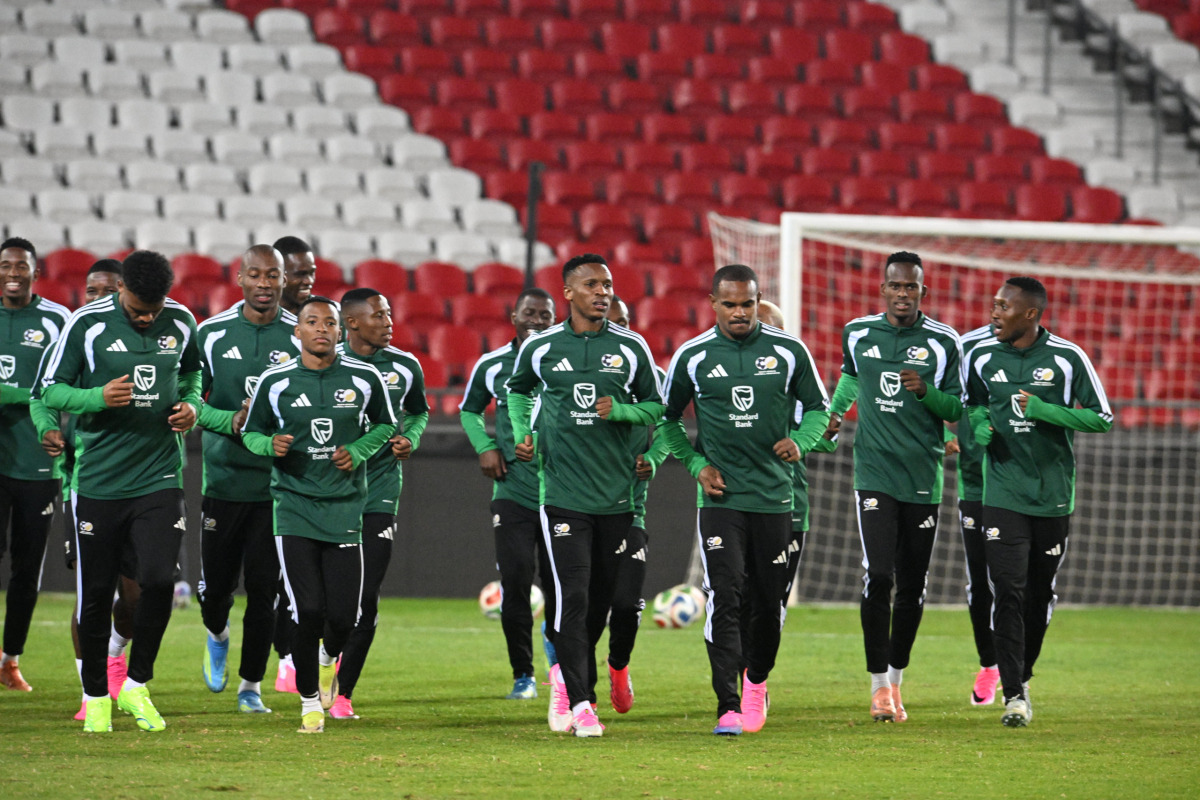
Photo: Lefty Shivambu/Gallo Images