 Africa
•
League
Africa
•
League
Africa Cup of Nations
24
Teams
52
Matches
Africa
•
League
24
Teams
52
Matches
 Namibia
 Congo
Congo
September 24, 2026 · 15:00
 Congo DR
 Equatorial Guinea
September 24, 2026 · 18:00
 Libya
Libya
 Botswana
September 24, 2026 · 18:00
 Mauritania
 Central African Republic
September 24, 2026 · 19:00
 Côte d'Ivoire
 Ghana
Ghana
September 24, 2026 · 21:00
 Tunisia
 Uganda
September 24, 2026 · 21:00
 Cameroon
 Comoros
September 24, 2026 · 21:00
 Sierra Leone
 Zimbabwe
September 24, 2026 · 22:00
 Tanzania
 Guinea-Bissau
September 25, 2026 · 15:00
 Sudan
Sudan
 Ethiopia
September 25, 2026 · 18:00
 AFCON
AFCON
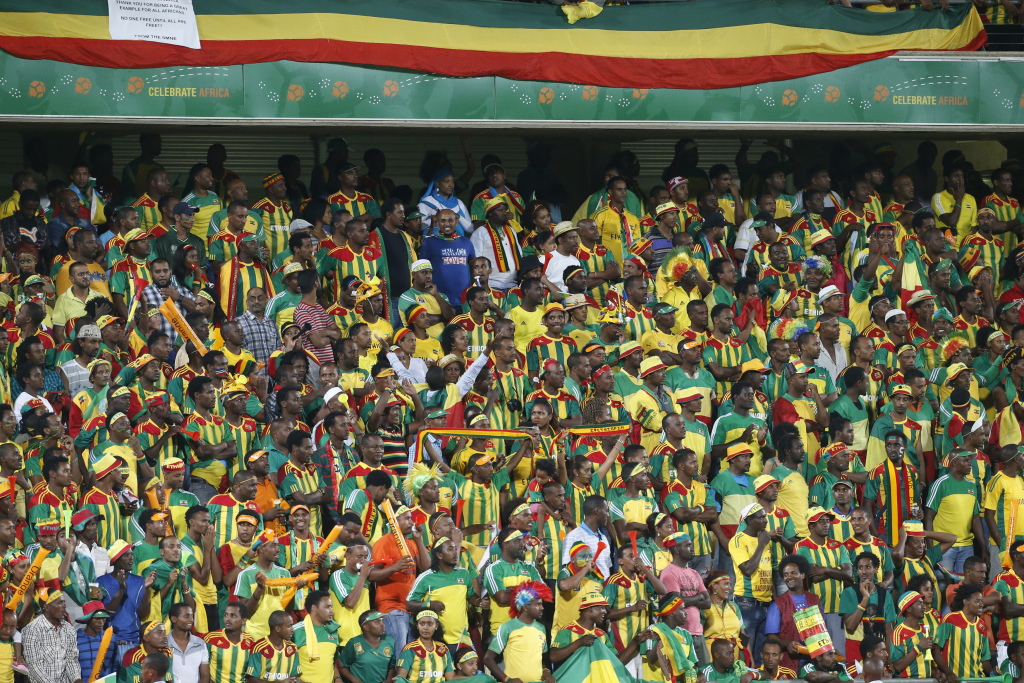
Ethiopia has formally submitted its bid to host the Africa Cup of Nations (AFCON) in 2028, which would be its first in more than half a century.
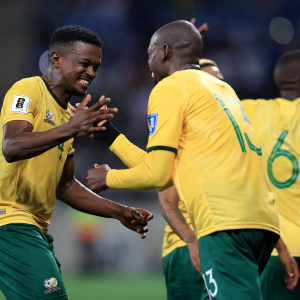
South Africa have been drawn alongside Guinea, Kenya and Eritrea in Group D of the AFCON 2027 qualifying draw, setting up a fascinating clash between Bafana Bafana and a Kenya side coached by South African legend Benni McCarthy.
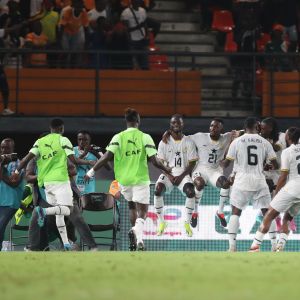
Ghana were drawn in the same group as the Ivory Coast when the 2027 Africa Cup of Nations qualifying draw was made in Cairo on Tuesday.
| # | Team | P | W | L | Pts | Form |
|---|---|---|---|---|---|---|
| 1 |
 Algeria
|
3 | 3 | 0 | 9 |
L
W
W
W
|
| 2 |
 Nigeria
|
3 | 3 | 0 | 9 |
W
W
W
W
W
|
| 3 |
 Egypt
Egypt
|
3 | 2 | 0 | 7 |
L
W
D
W
W
|
| 4 |
 Morocco
|
3 | 2 | 0 | 7 |
W
W
W
D
W
|
| 5 |
 Senegal
|
3 | 2 | 0 | 7 |
W
W
W
W
D
|
| 6 |
Côte d'Ivoire
|
3 | 2 | 0 | 7 |
L
W
W
D
W
|
Top 4 qualify for European competition
Algeria
ALG
Nigeria
NGA
Egypt
EGY
Morocco
MAR
Senegal
SEN
Côte d'Ivoire
CIV
The Africa Cup of Nations (AFCON) is Africa’s premier international football tournament. It brings together the best national teams from across the continent to compete for the top prize in African football.
Organised by the Confederation of African Football, the tournament is known for its intensity, varied playing conditions and unpredictable outcomes.
AFCON was first held in 1957, with only three teams participating in the inaugural tournament.
The competition has expanded significantly over time and now features 24 teams, reflecting the growth of football across Africa. It remains the continent’s flagship international event.
AFCON features 24 teams divided into six groups of four.
Teams level on points are separated by:
Egypt are the most successful nation in AFCON history, with seven titles. Their most dominant period came between 2006 and 2010, when they won three consecutive tournaments.
Nations such as Nigeria and Ghana have consistently performed at a high level, contributing to the tournament’s competitive balance.
Recent tournaments have seen a wider spread of winners, reflecting the growing depth of African football.
Laurent Pokou and Rashidi Yekini are also among the leading scorers across different eras of the competition.
Samuel Eto’o remains the most prolific scorer in AFCON history and one of the competition’s defining players.
Didier Drogba led Ivory Coast’s golden generation and played a key role in their consistent performances across multiple tournaments.
Yaya Touré was central to Ivory Coast’s 2015 title-winning side and one of the most influential midfielders of his era.
Hassan Shehata led Egypt to three consecutive titles between 2006 and 2010, one of the most dominant periods in AFCON history.
Hervé Renard is one of the most successful AFCON coaches, winning the tournament with Zambia and Ivory Coast.
AFCON is defined by its intensity, travel demands and varied playing conditions across the continent. Matches are often tight and shaped by tactical discipline.
It remains the highest level of international football in Africa and a major platform for players to establish themselves globally.
Success in AFCON carries significant national and historical importance.