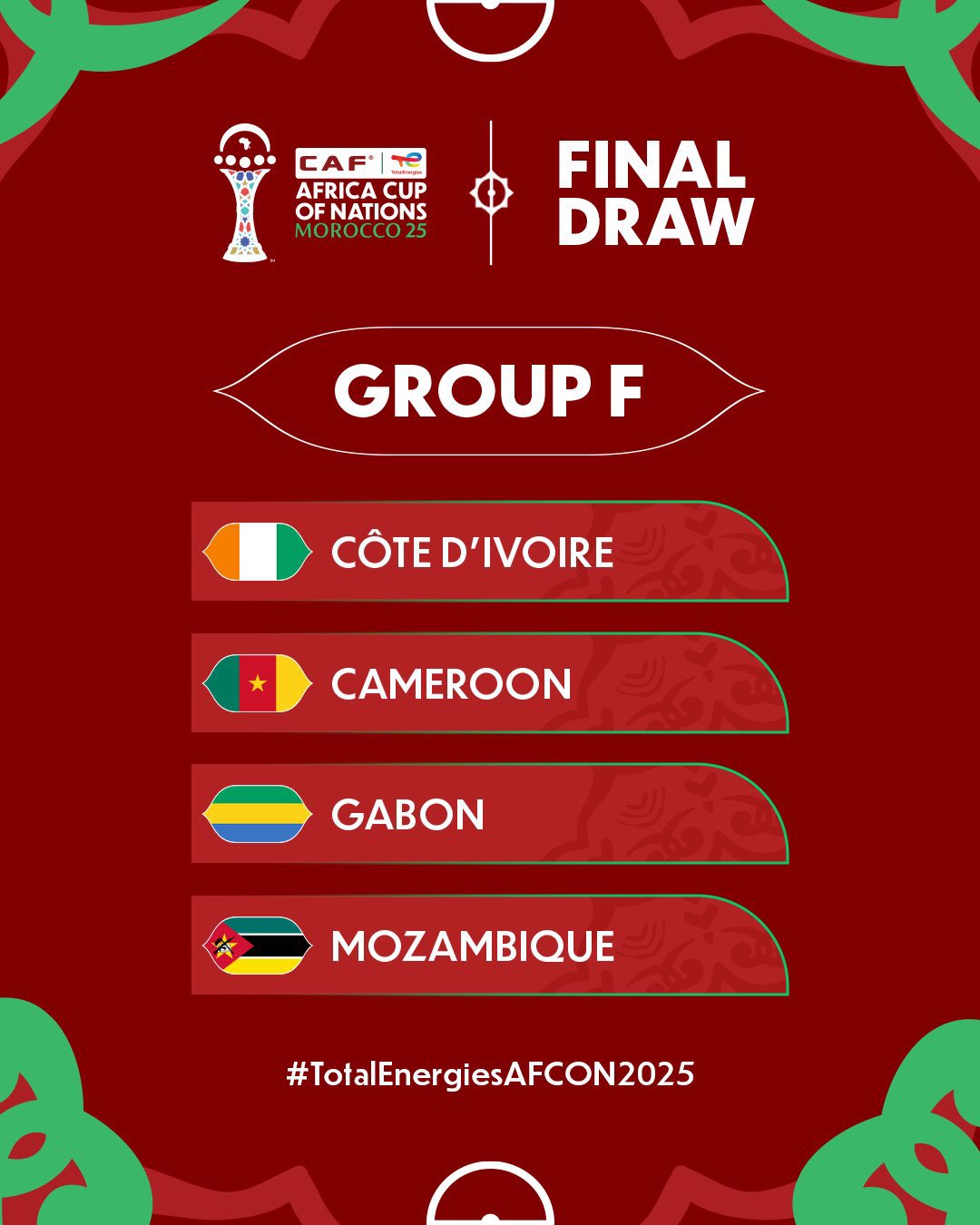
Cameroon, Gabon, Côte d’Ivoire and Mozambique approach the 2025 Africa Cup of Nations with contrasting histories, trajectories and expectations.
While Cameroon and Côte d’Ivoire arrive with established pedigree and well-defined performance standards, Gabon and Mozambique enter the tournament intent on reaffirming their progress and elevating competitive consistency. The group, rich in historical weight and tactical variance, is widely viewed as one of the most competitive in Morocco.
Cameroon enter the 2025 edition seeking to re-establish their continental stature following a disappointing campaign in Cote d’Ivoire two years earlier. This tournament marks their 22nd appearance, extending a record of consistency befitting a five-time champion.
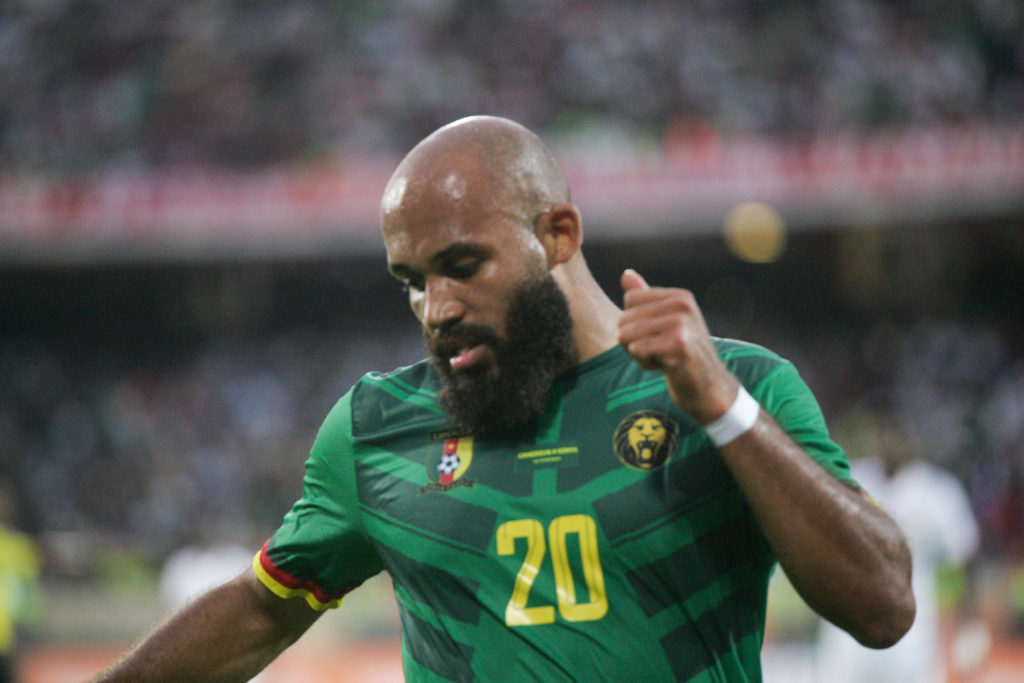
Under the direction of Belgian coach Marc Brys, the Indomitable Lions qualified with relative ease, completing their group stage unbeaten. The squad draws its stability from a core of established Europe-based players, notably Manchester United forward Bryan Mbeumo, goalkeeper André Onana—currently on loan at Sivasspor—and Brighton midfielder Carlos Baleba. Captain Vincent Aboubakar continues to serve as the key leadership figure in the squad.
READ: Cameroon sack coach, drop Onana for AFCON
Cameroon’s first continental triumph came in 1984, while their most recent title was secured in 2017. Only Egypt have accumulated more AFCON championships. Given the blend of top-tier club experience and a favourable qualifying run, the team enters Morocco with expectations of advancing deep into the competition.
Gabon rejoin the continental stage for their ninth AFCON appearance after missing the previous edition. Coach Thierry Mouyouma—appointed in 2023—guided the team back to qualification through an organised, disciplined framework that prioritised defensive structure and efficient transitions. He becomes only the second Gabonese manager to lead the country to the tournament.
At 36, Pierre-Emerick Aubameyang remains central to Gabon’s attacking ambition. Alongside him, experienced players such as Denis Bouanga, Bruno Ecuele Manga and Mario Lemina provide maturity across key units of the pitch. The nation’s strongest historical performances date back to the quarterfinal runs of 1996 and the co-hosted 2012 edition.
Gabon’s challenge will revolve around balancing veteran reliance with the physical demands of tournament football, while attempting to re-establish themselves as a competitive presence after an absence from the 2023 finals.
Côte d’Ivoire: Title Holders Balancing Continuity and Emerging Talent
Côte d’Ivoire arrive in Morocco as reigning champions, making their 25th AFCON appearance with ambitions of securing a fourth continental title. Their previous successes came in 1992, 2015 and most recently 2023, when coach Emerse Faé—taking charge mid-tournament—engineered a remarkable recovery that culminated in victory on home soil.
The squad blends an experienced core with a growing cohort of emerging talent. Brighton winger Simon Adingra, named Best Young Player at the 2023 tournament, remains a focal point in wide areas. Manchester United’s Ahmad Diallo adds attacking versatility, while Belgium-based midfielder Oumar Diakité contributes dynamism in the centre of the pitch. Aston Villa’s new signing Yvan Goussaint strengthens the team’s adaptability across defensive and midfield roles.
Beyond their three titles, Côte d’Ivoire have twice finished as runners-up (2006 and 2012). With continuity in leadership and depth across all phases of play, the Elephants enter the competition as one of the leading favourites to secure another deep run.
Mozambique head to Morocco for a second consecutive AFCON appearance and the sixth in their history, reinforcing a period of gradual progress under head coach Chiquinho Conde. Remarkably, Conde has been involved in five of the nation’s six appearances—three as a player and now two as coach—symbolising his longstanding influence on Mozambican football.
Their 2023 campaign highlighted their competitive potential, producing notable 2–2 draws against seven-time champions Egypt and four-time winners Ghana, even though they narrowly missed out on the knockout stage. At just 24, winger Jaimé Catamo has emerged as a primary offensive outlet, offering pace and direct threat. Defensively, Renildo Mandava—Mozambique’s first Premier League player—anchors the back line with composure and experience.
The team’s recent trajectory suggests a growing capacity to trouble higher-ranked opponents, though consistency across group fixtures remains their central challenge.
AFCON Group E: Algeria, Burkina Faso set for competitive group
Côte d’Ivoire will begin their title defence against Mozambique in Marrakech on 24 December. On the same day, Cameroon and Gabon will contest a fixture that may carry significant implications for progression from the group.
One of the tournament’s marquee early encounters arrives on 28 December, when Côte d’Ivoire meet Cameroon in Marrakech. Given both teams’ tournament pedigree, the match could become decisive in determining the group’s hierarchy.
Photo by Vincent Kimto/Gallo Images